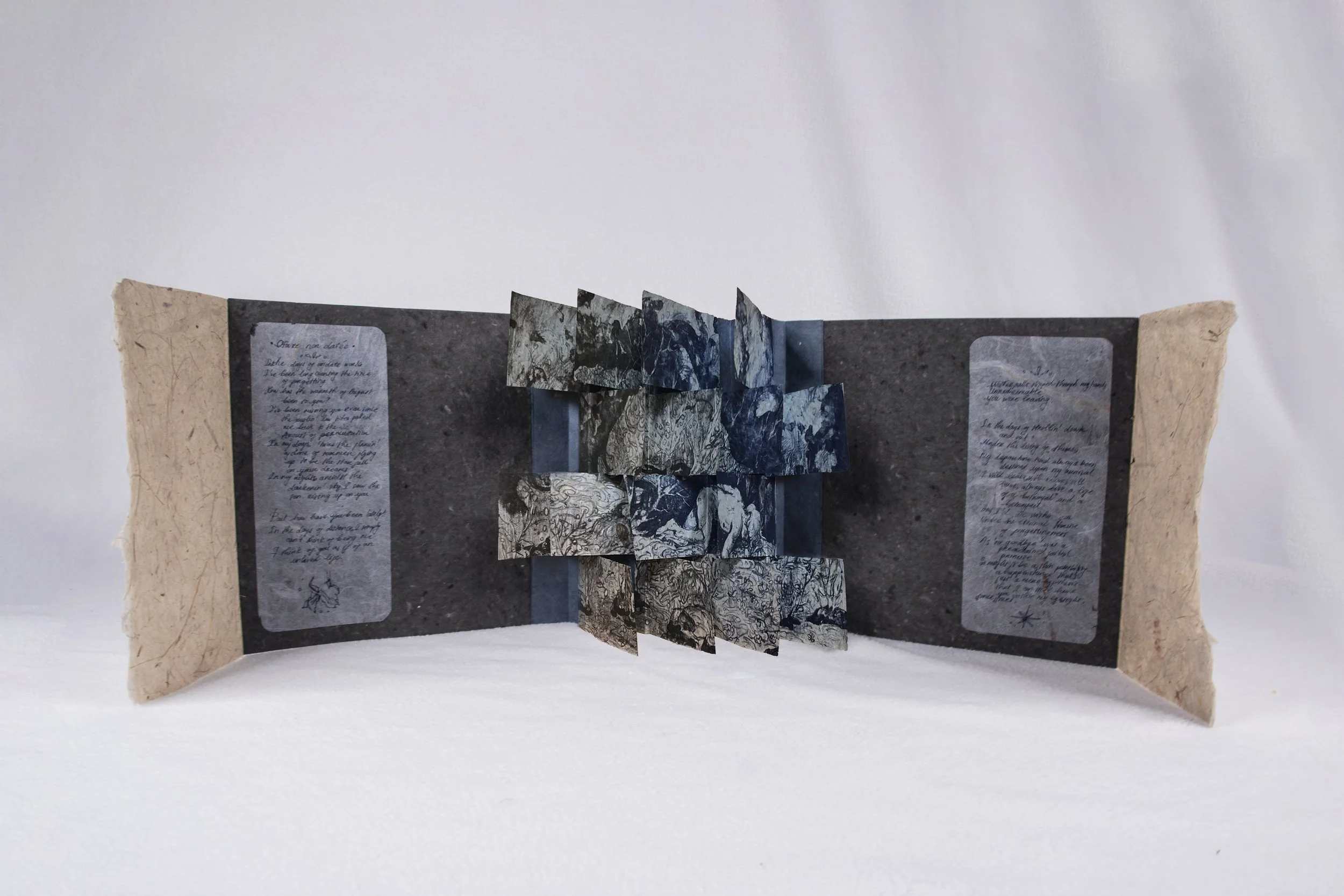
Œuvre non Datée
Medium: Artist’s book, Lithography on Handmade Paper (kozo, Medford’s foliage, abaca, cotton).
Edition of 2
Size: 8" x 8"
Year: 2023
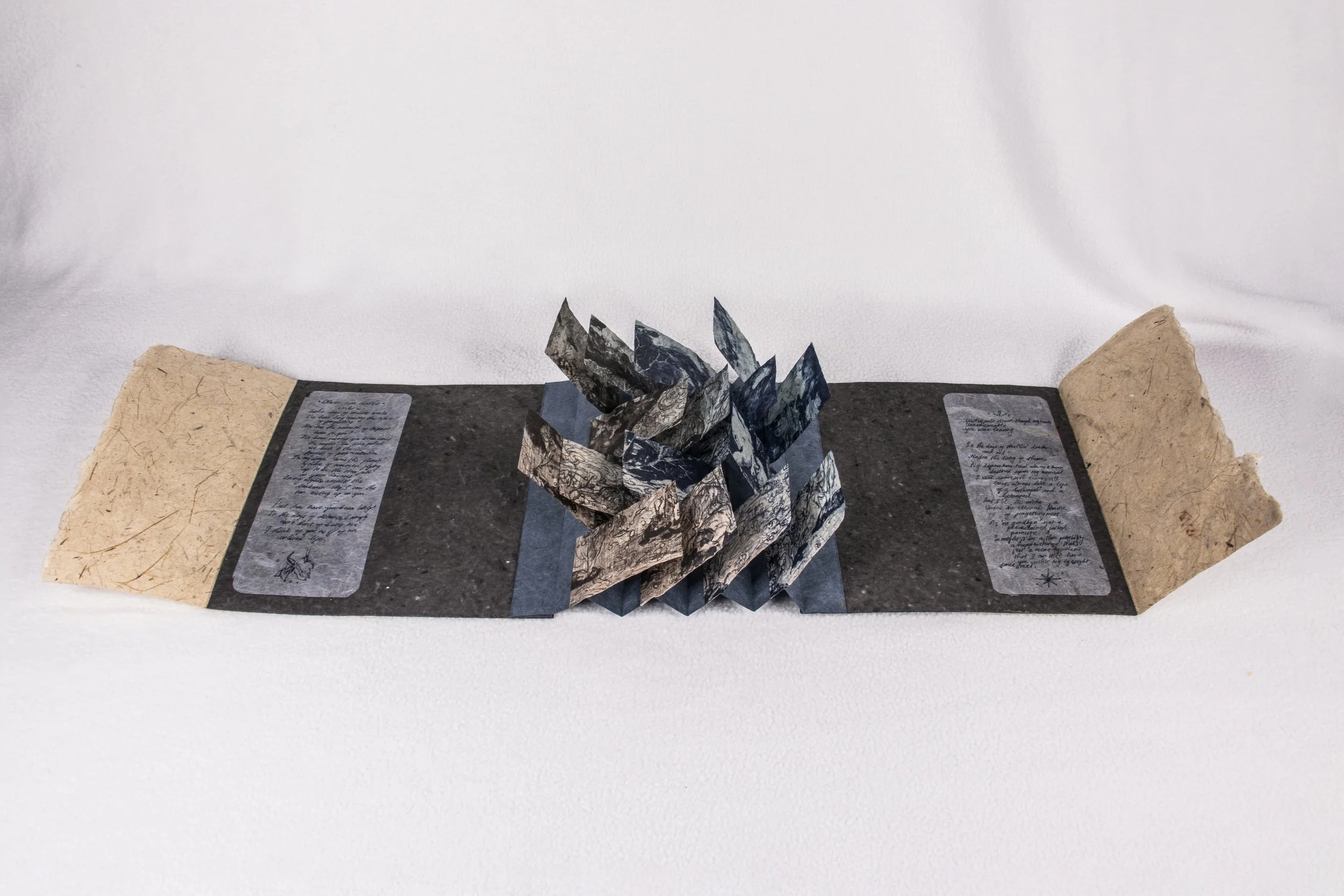
This artist's book of poetry explores the perpetual cycle of metamorphosis that unfolds over a lifetime, capturing the tension between transformation and stasis. It examines the act of forgetting within the eternal circular return of history, where memory fades yet patterns endure. Through a poetic juxtaposition of agony under the dual burdens of heaviness and lightness, the work delves into the intricate interplay of time, memory, and transformation.
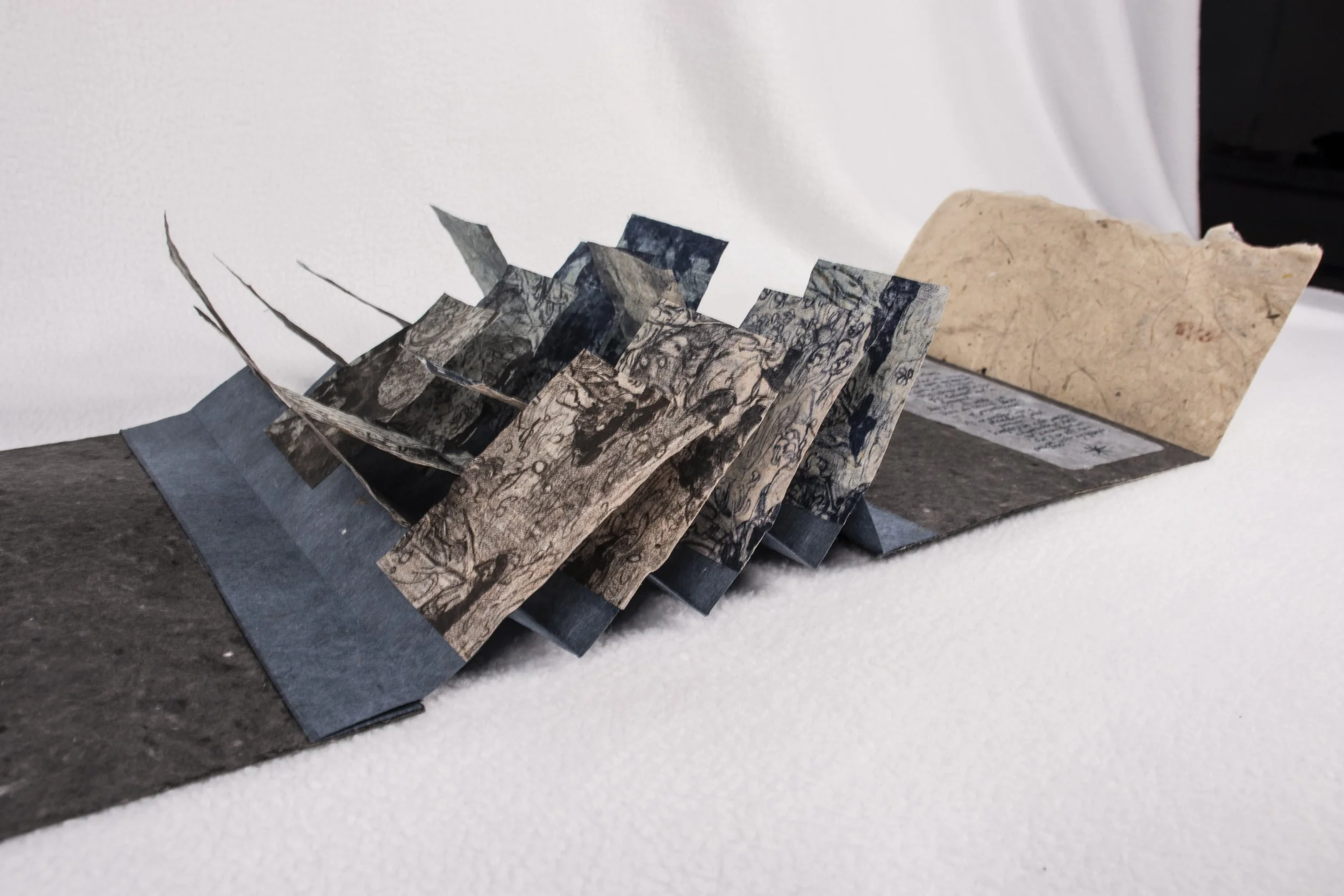
The structure of a flag book is an ingenious combination of an accordion spine and a series of small panels, or "flags," attached to alternating sides of the folds. The flags are individually mounted to the valleys of the accordion folds in an alternating pattern, enabling them to fan out dynamically when the book is opened. This arrangement allows the flags to overlap, interact, or display sequentially, depending on how the book is viewed or handled.



In the days of undated works
I’ve been long counting the time of forgetting
How has the warmth of August been to you?
I’ve been missing you ever since the ruslin’ low tides pulled me back to the gone August of permutation
In my days, ‘twas the flamin’ cyclone of summer flying up to be the starfall on your dreams
In my nights, amidst the darkenin’ sky I saw the sun rising up on you.
But how have you been lately?
In the days of distance, I simply can’t think of being me
I think of you as if of an unlived life.
Waterfalls slipped through my hands
Unredeemable
You were leaving.
In the days of strollin’ down and out
Under the living of others,
I was, after all, entirely uninvited
My departure had always been destined upon my arrival
I will leave, will leave, will leave; always live a life of a betrayal and a betrayed
But I’d die within you
Under the eternal shrine of forgettingness
As ‘no goodbye’ was a preordained failed promise
So might it be a thin possibility—a happenstance that’s just a mere hypothesis—that I can still have you within my eyesight,
sometimes.
Papermaking Process
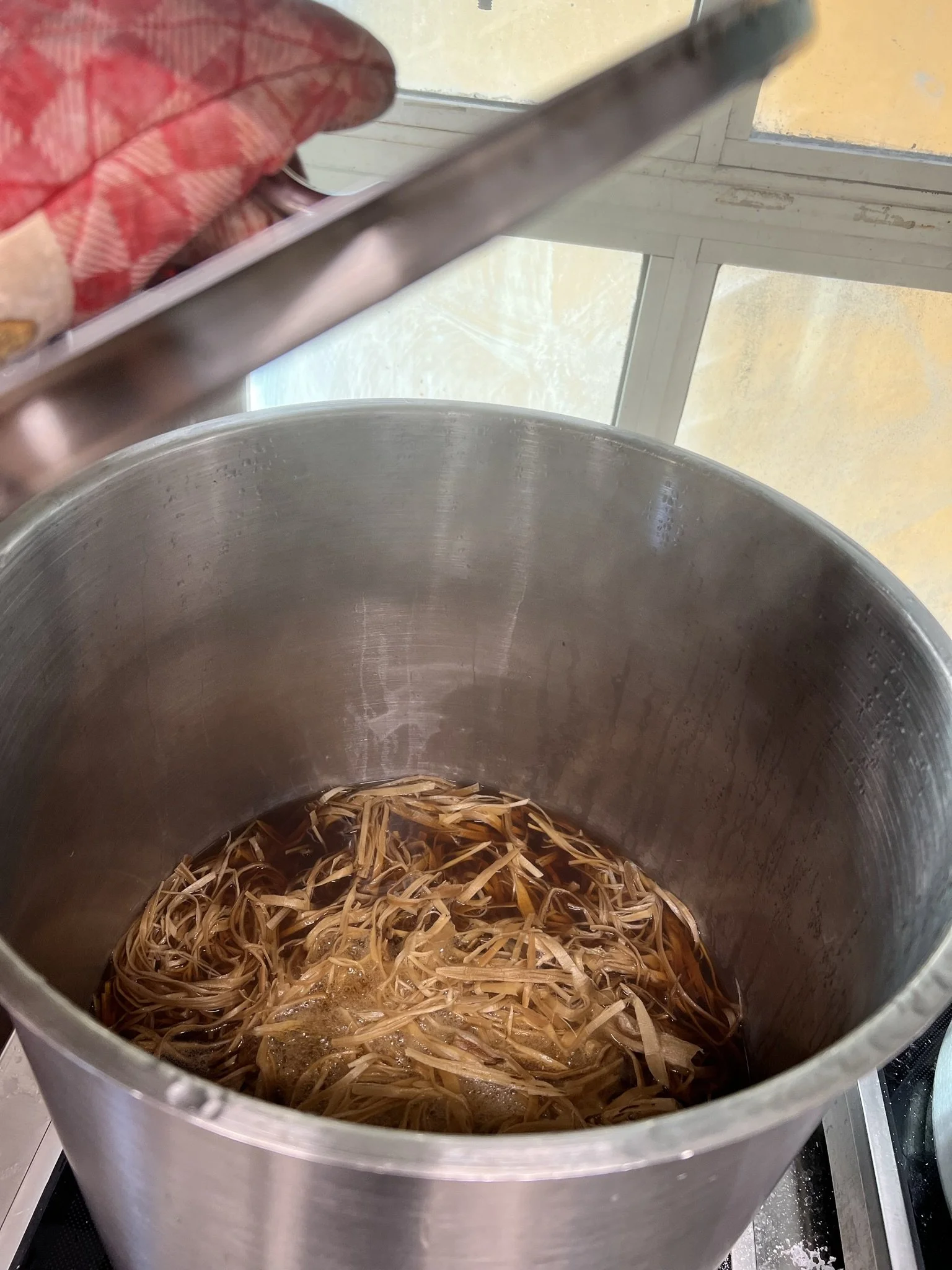
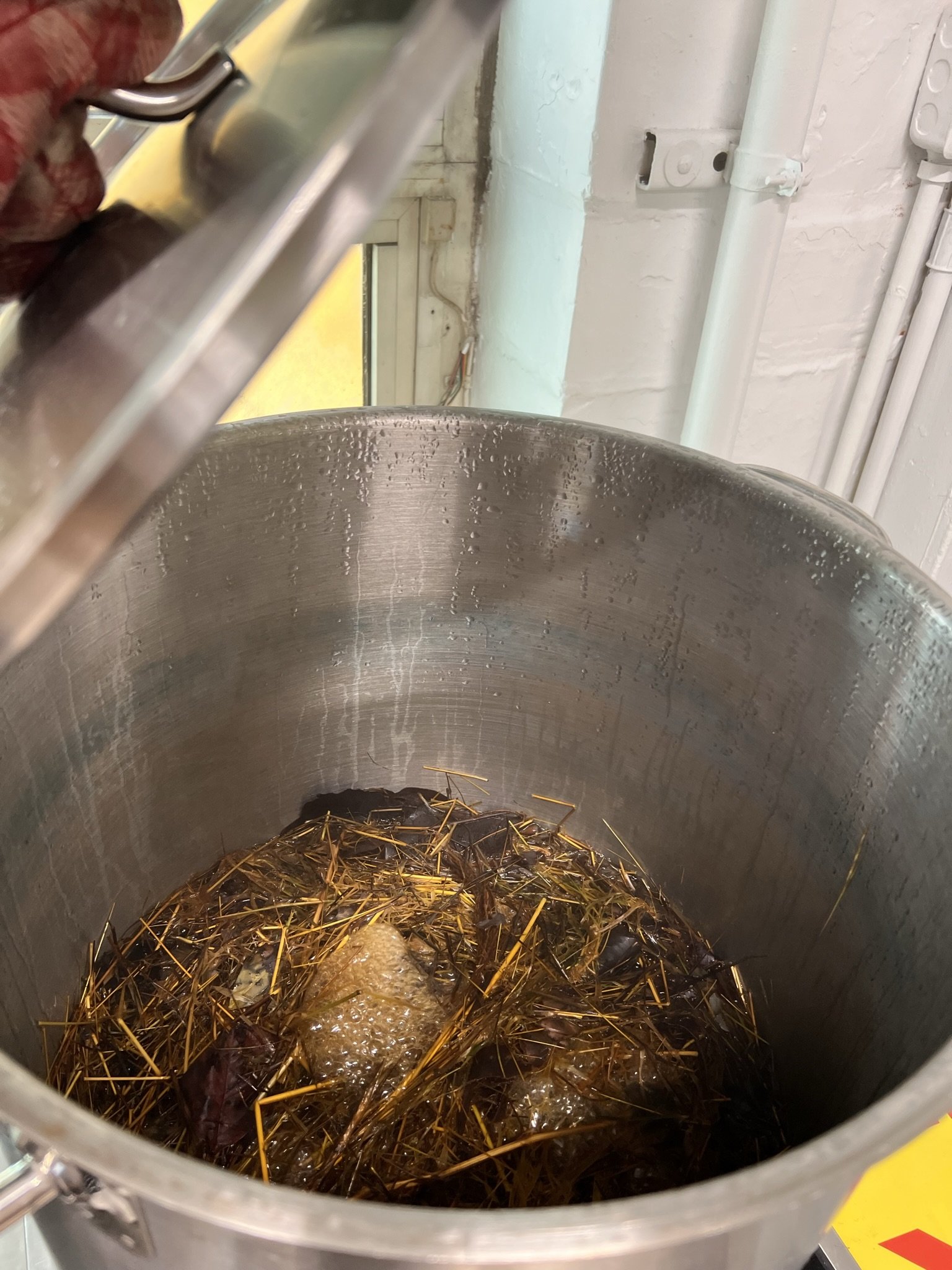
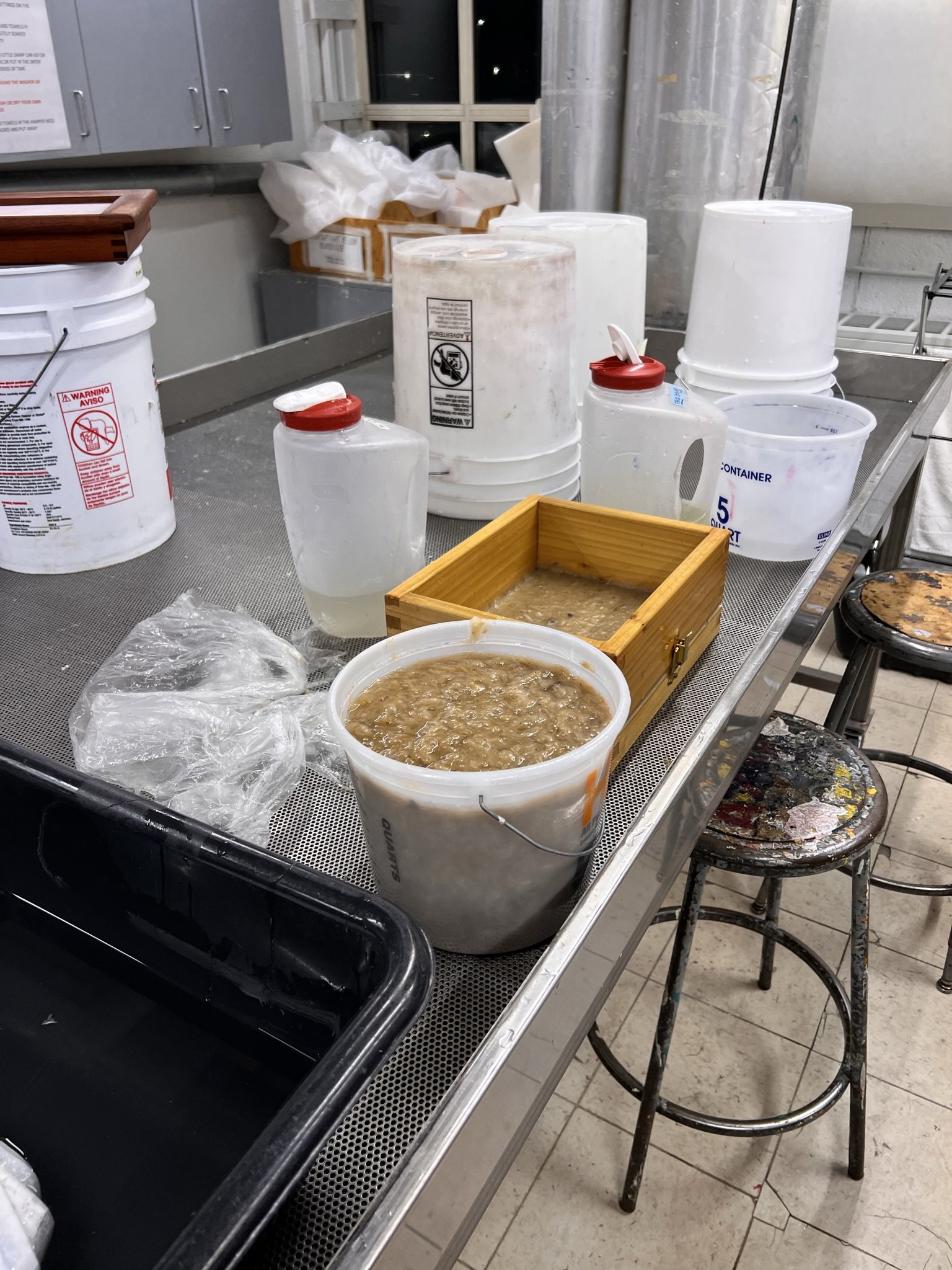
Cooking kozo and local plants
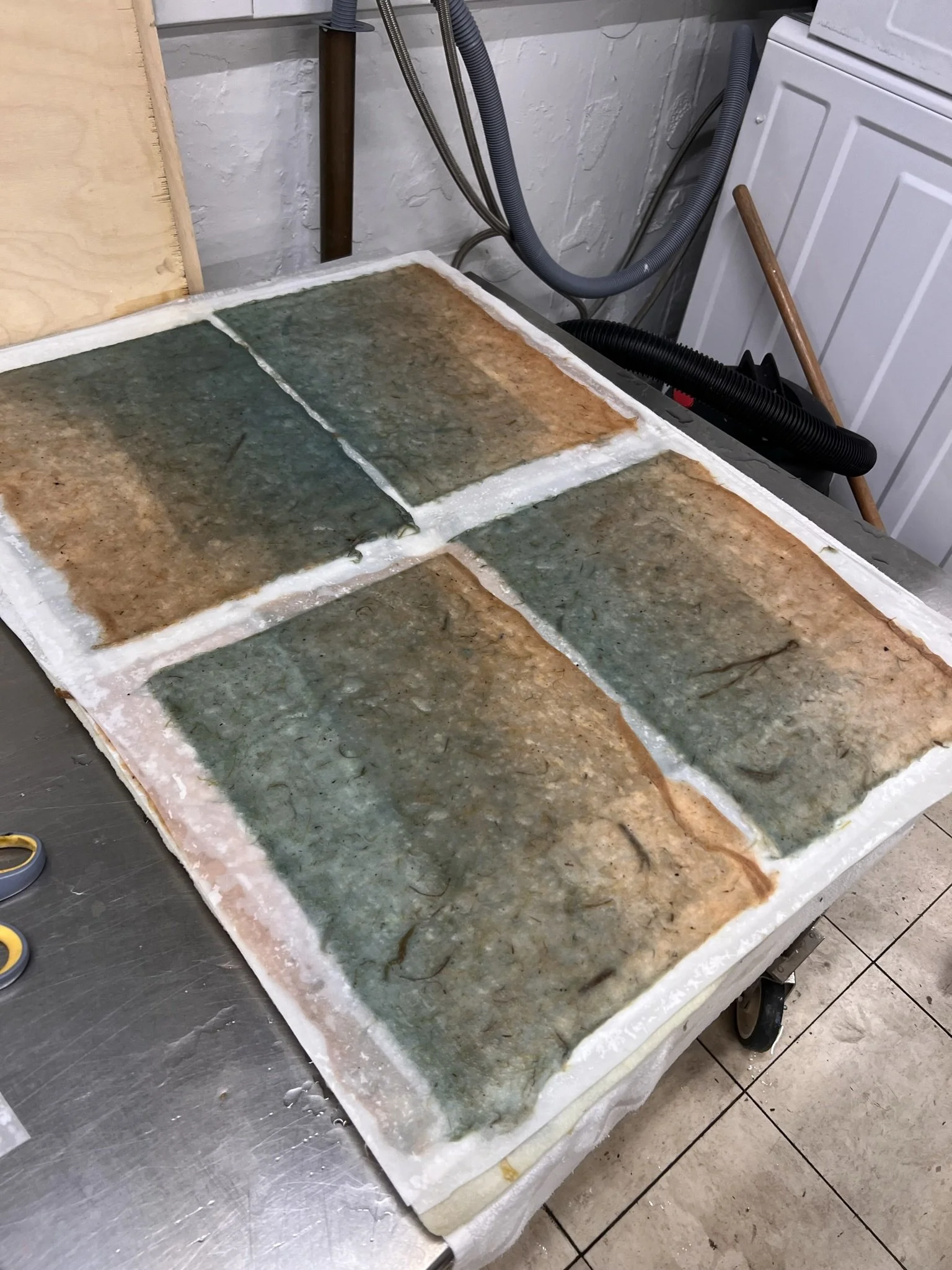
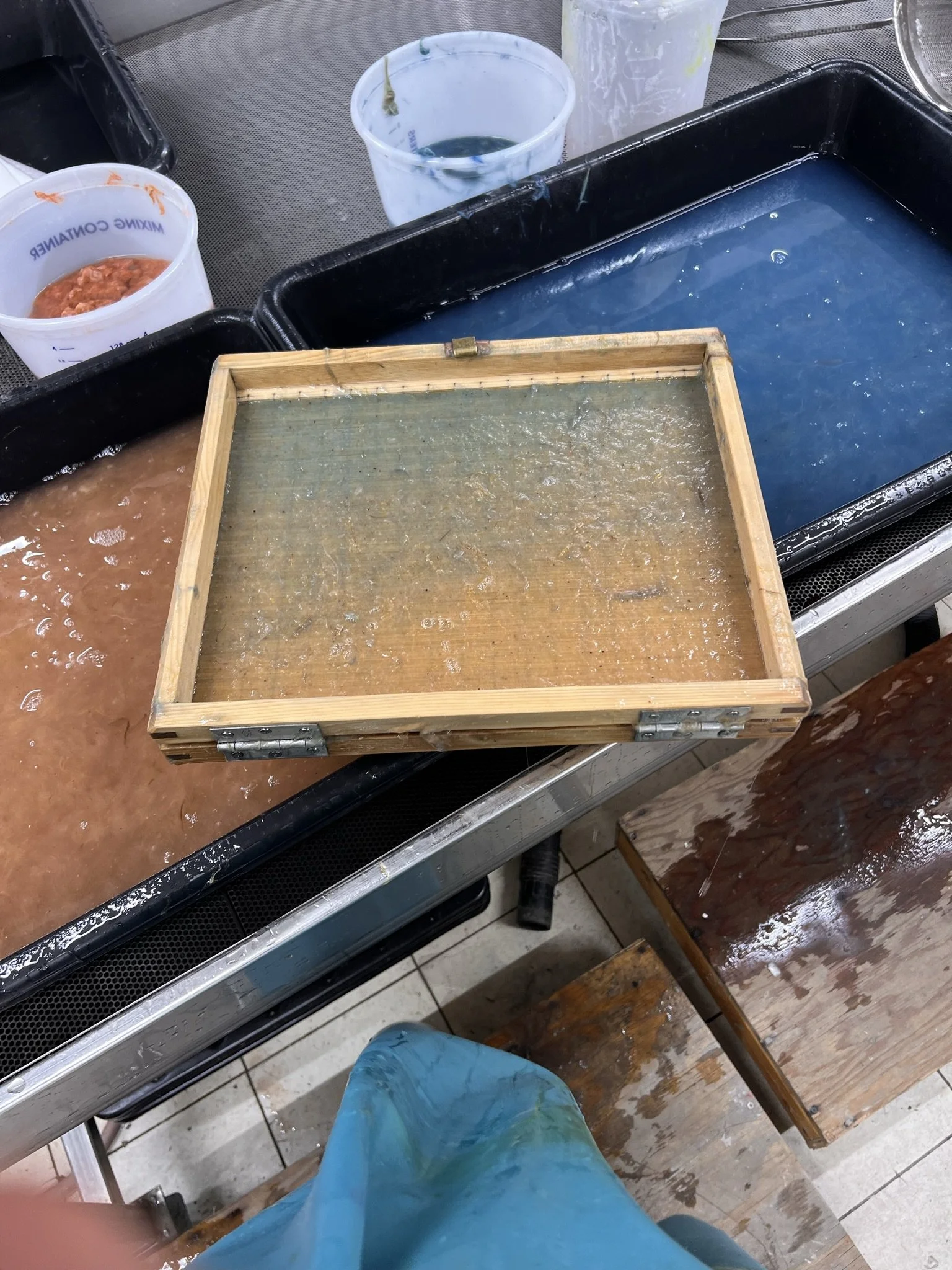
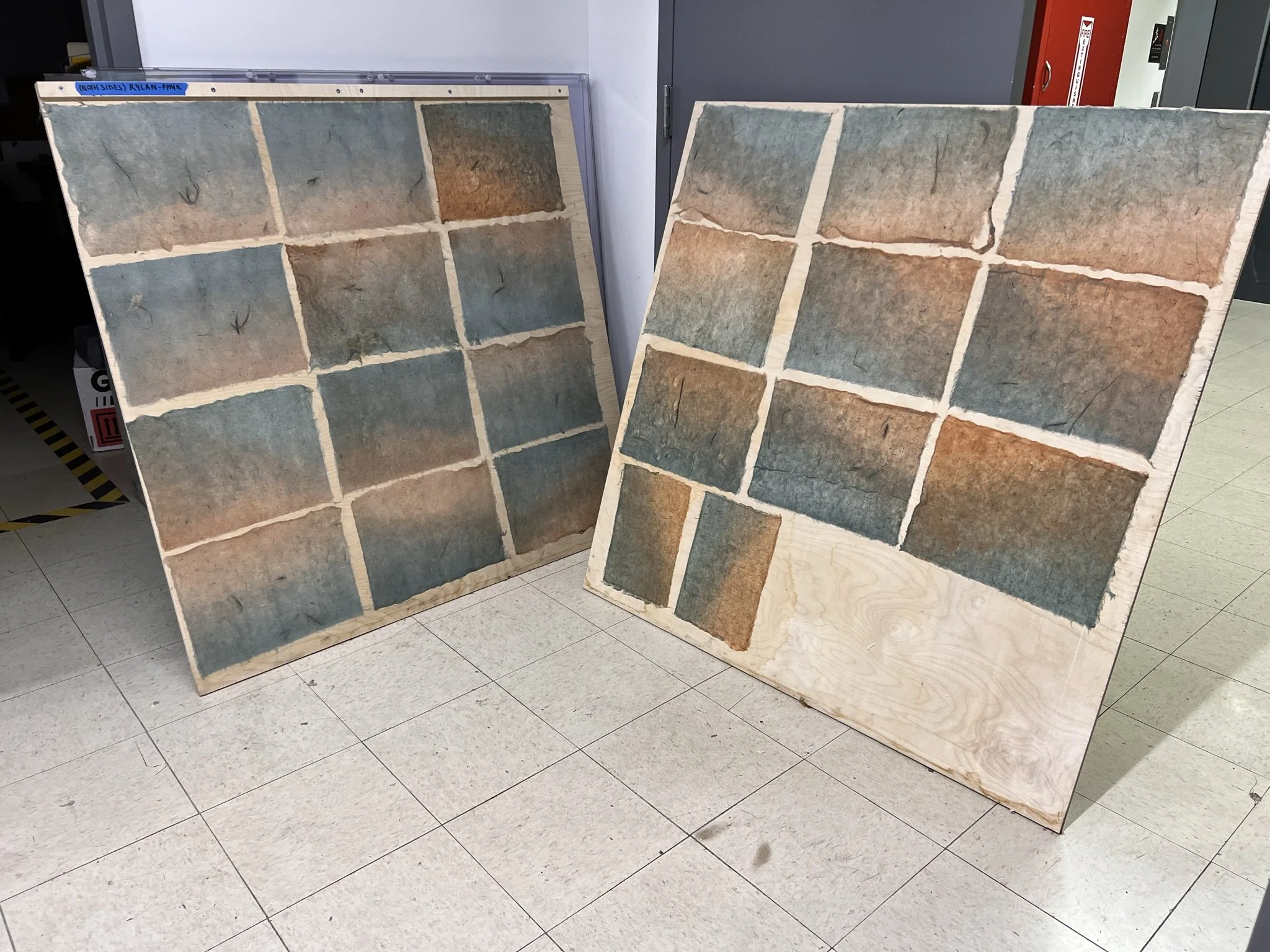
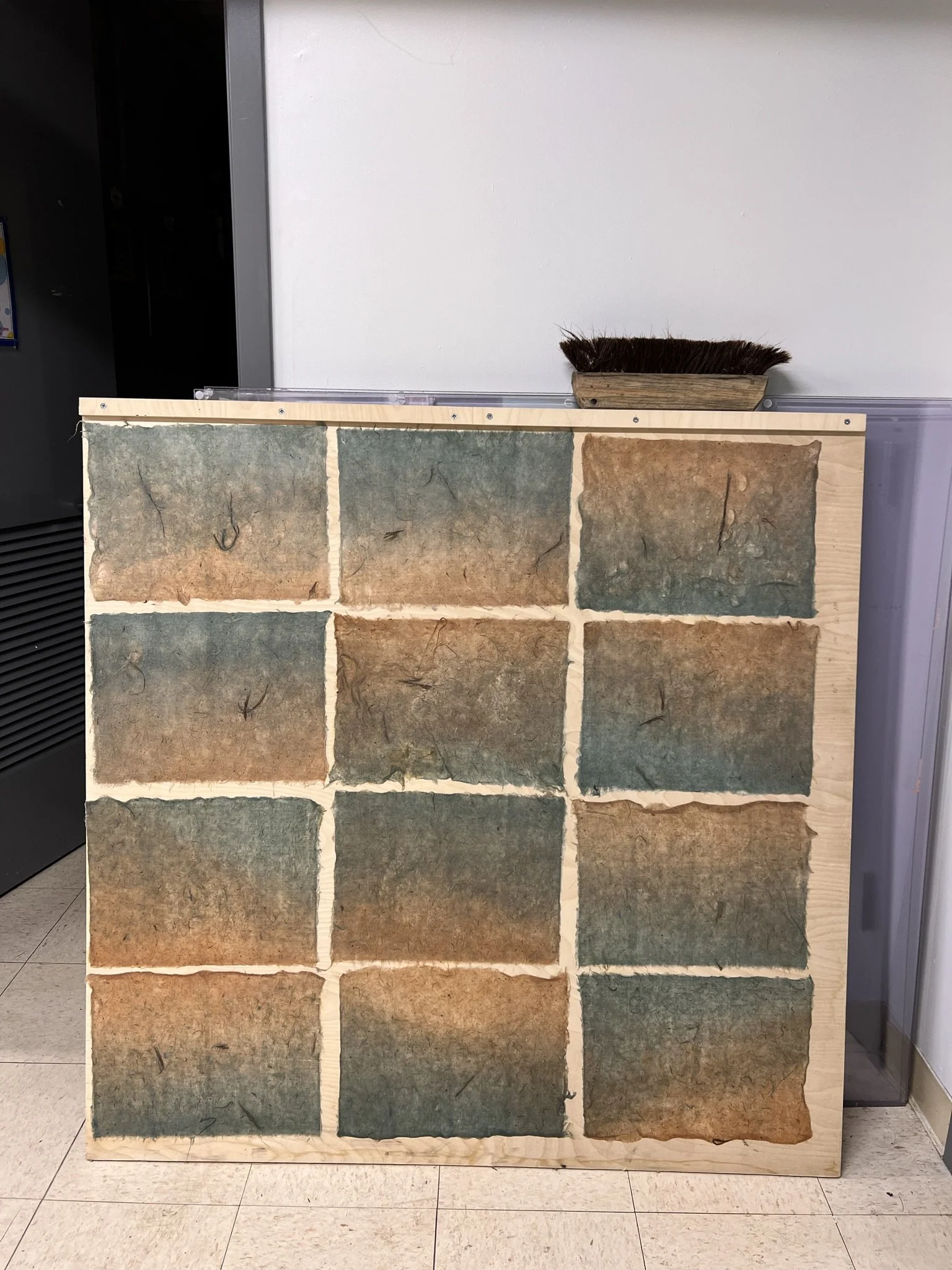
Another batch of pulp was divided in two and dyed in blue and orange-red. To create a red-blue gradient sheet, a sugeta was alternated between the two trays of colored pulp.
The sheets were left to air-dry on wooden boards.
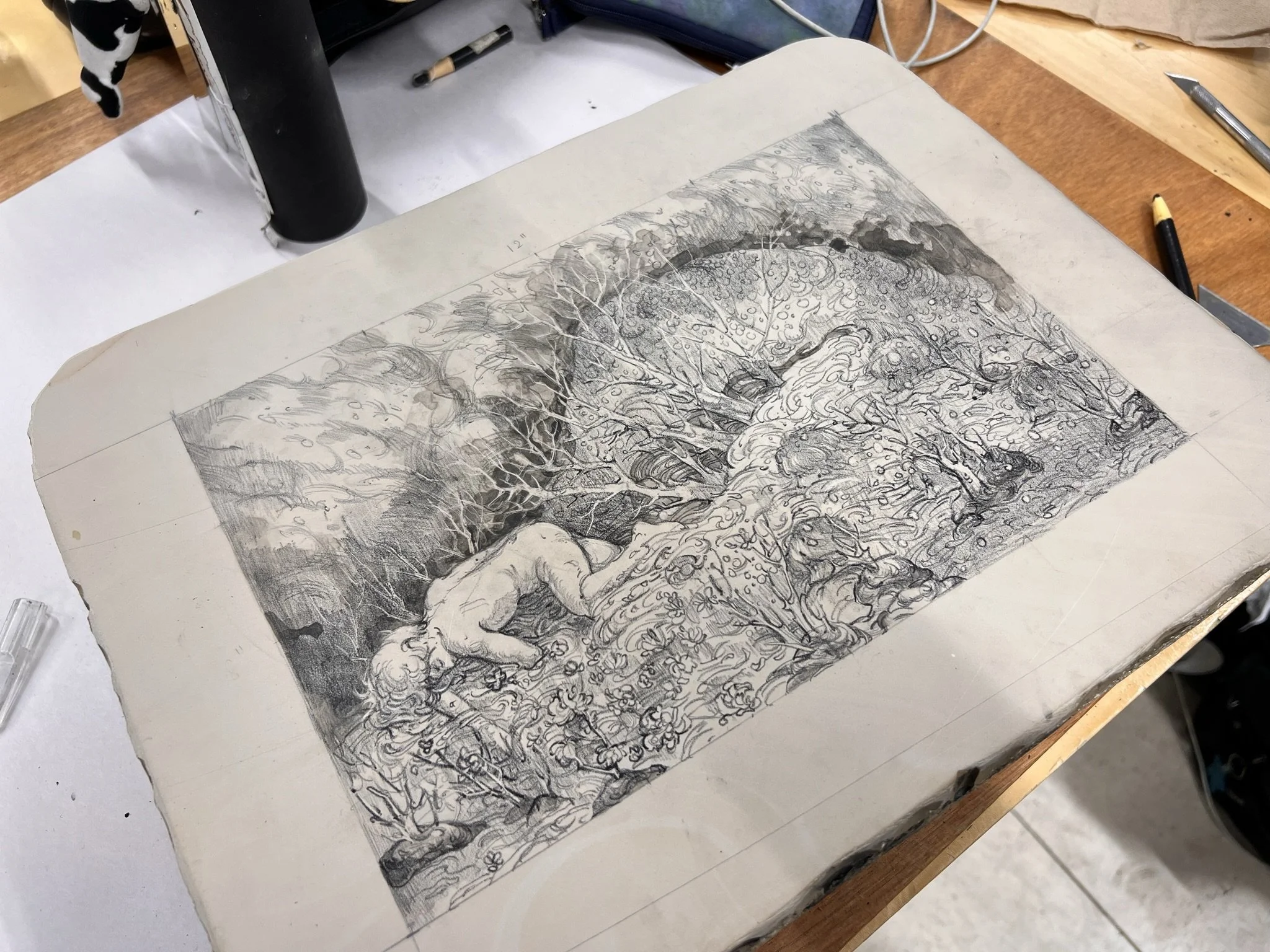
2. Printmaking & Bookmaking process
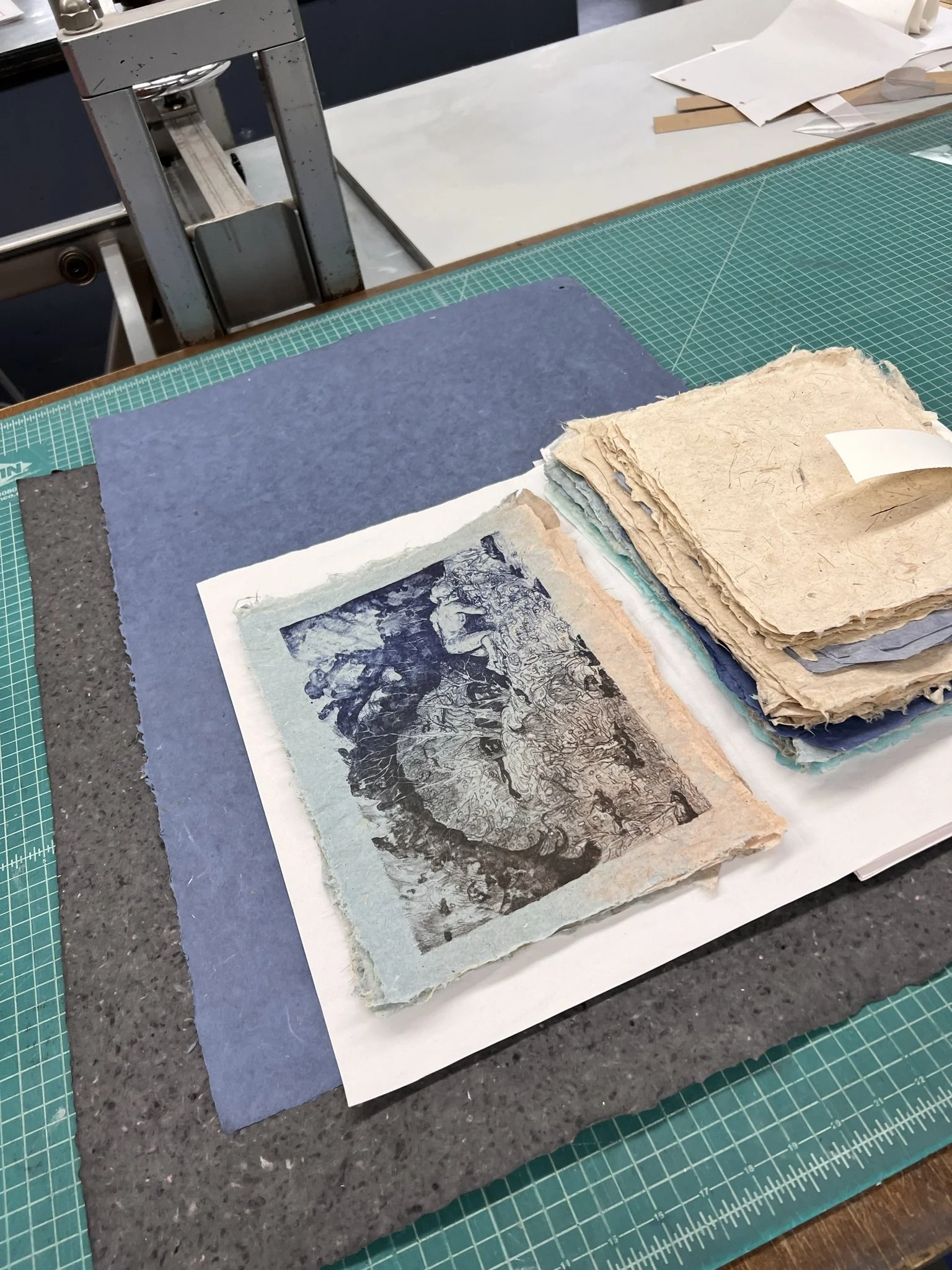
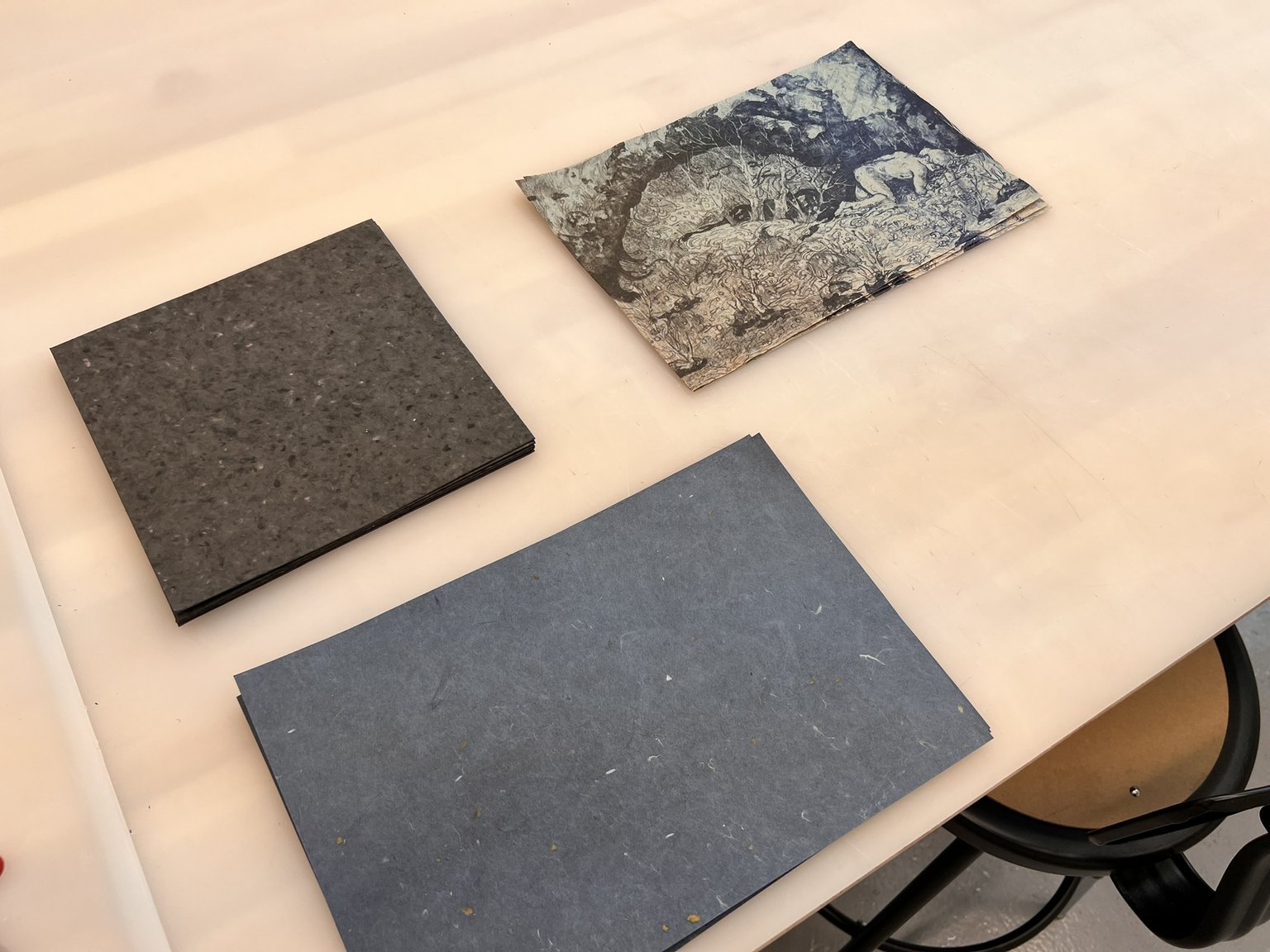
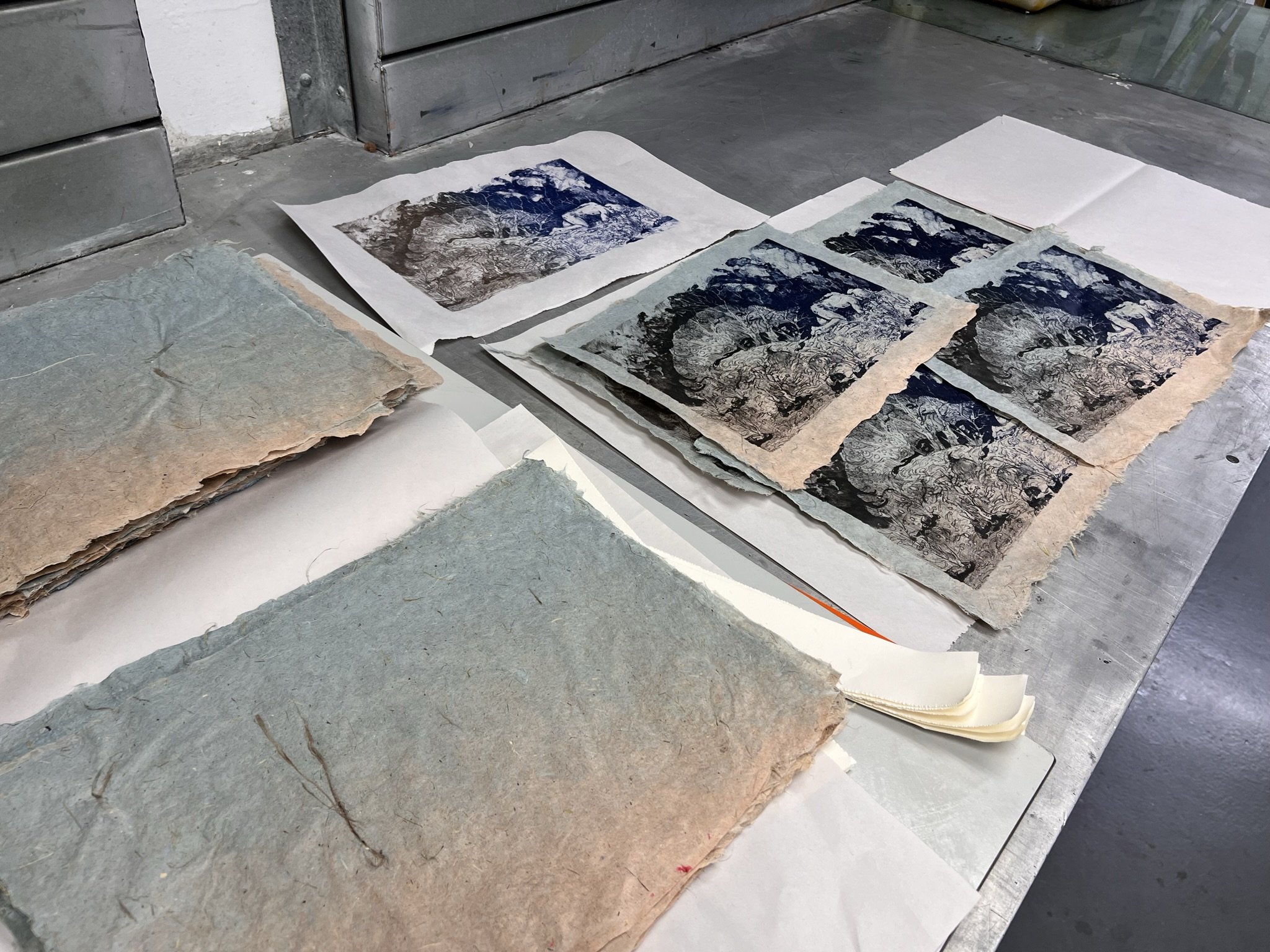
The book was then carefully assembled using various types of handmade paper, chosen for their specific characteristics. Cotton paper was selected for the cover due to its thickness and sturdiness. A mix of kozo and local foliage was used for the image sheets, which were arranged in a flag-style layout, valued for their thinness and translucency. Finally, the accordion spine was crafted from a blend of abaca and kozo, appreciated for its flexibility.